
1. Cummings’ Injury and the Suspense
Cummings missed Perth’s first victory due to a back injury and was widely expected to skip Brisbane to ensure a healthier return in subsequent matches. However, his increased training with the pink ball in Perth, Sydney, and then Brisbane reignited speculation about a “sudden comeback.”
The team management did not immediately rule out his possibility of playing, but deliberately delayed announcing the final eleven-man squad, keeping the regular captain in a “ready to play at any time” state. This ambiguity and reservation reflected both a careful assessment of his physical condition and an implicit sense of uncertainty in England’s preparations.
2. Squad Choices: Who Will Make Way for Him?
Once Cummings is cleared to play, Australia’s primary question becomes: who will “make way” for his return? Logically, the most direct solution is to replace Brendan Doggett, who made a brilliant debut in Perth, with him—meaning replacing a newly proven face with experience and consistency. Another, more radical approach was to forgo Nathan Lyon and assemble a full-fledged four-seams offense, leaving the spin pitching to the field, weather, and unspoken pressure. However, considering Lyon’s historically strong record in Gabbana and the fact that this was a day-and-night pink ball game, the core of the coaching selection process was balancing traditional trust with tactical risk-taking.
3. The Aura of the Pink Ball, Gabbana, and the Fastball Group
The day-and-night testing and Brisbane itself were almost a natural advantage for Australian fastballers. Data showed that Australia’s main seamstaff pitchers generally performed better on pink balls than on regular red balls, with average stats dropping significantly more than usual, giving them exceptionally high offensive power in this game format.
Therefore, Cummins’ return wouldn’t just add another excellent pitcher; it would push the already sharp pink ball weapon a step further. For England batsmen, this will turn the twilight and night sessions from “difficult” to “hellish,” forcing them to be doubly cautious both tactically and psychologically.
4. Smith’s Temporary Steering and the Reservations in His Statements
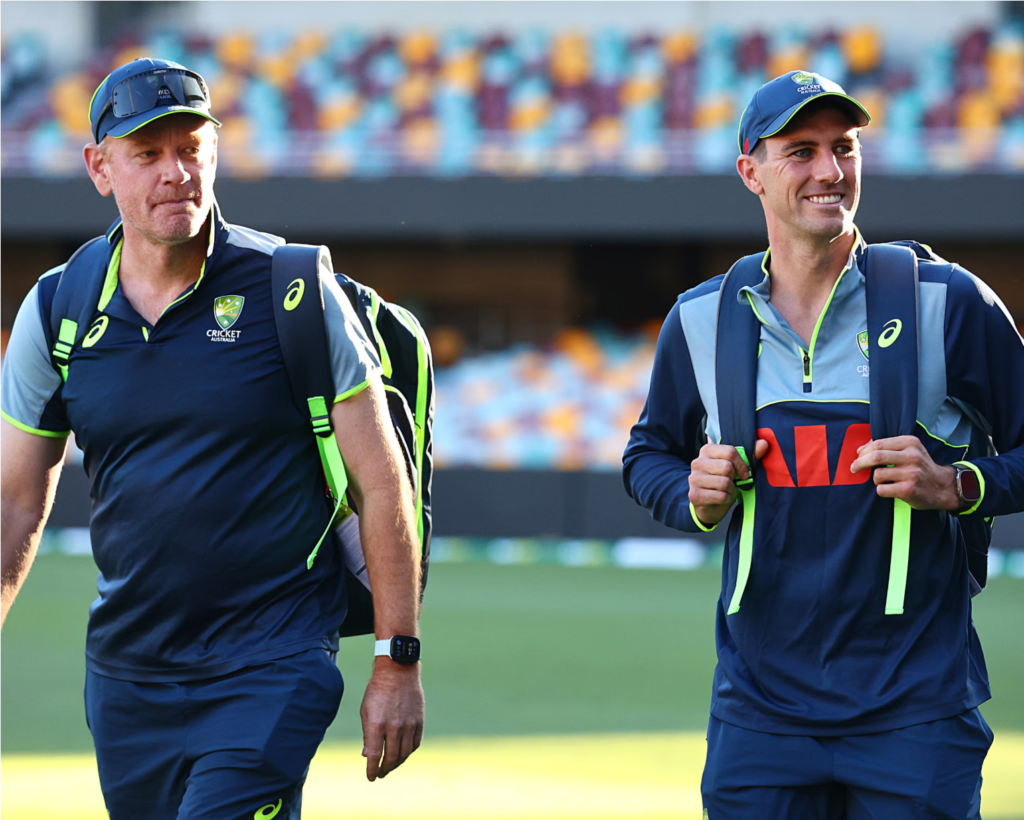
With Cummins’ participation still not 100% confirmed, Steve Smith continued to assume the role of pre-match press conference and on-field coaching. His statements to the media, while acknowledging that Cummins’ training form “looked good,” repeatedly emphasized that the decision would depend on the field conditions and the final assessment.
Smith also left room for interpretation regarding Leon’s role, reminding the outside world that the veteran had performed significantly in Gabbia and should not be easily considered a “sacrifice.” This deliberate avoidance of definitive statements essentially reserved room for all options: regardless of the final lineup selection, it could be traced back to the framework of “on-field judgment,” without appearing as a public rejection of any player.
5. Psychological Warfare: A Layer of “Fog” for England
From England’s perspective, Australia’s delayed announcement of its final lineup forces them to prepare for two versions of the home team’s fast-paced combination—with Cummins, and without Cummins. This not only affects the targeted simulation rhythm in training but also increases the complexity of discussions regarding batting order and field strategy.
For Australia, this “delay” and ambiguity is itself an extension of psychological warfare. Even if Cummins ultimately doesn’t play, as long as his name is still on the agenda the night before, England’s focus will inevitably be somewhat distracted, while the home team will gain an invisible sense of control over the narrative.
6. From Individual Dilemma to Collective Challenge
Cummins’ situation, on the surface, is a matter of personal injury and return timeline, but at a deeper level, it reflects a collective challenge facing Australia: how to maintain a lead without being hasty or missing any opportunity to further extend it. Recklessly fielding a key pitcher before they’ve fully recovered might create temporary intimidation, but it also sows the seeds of future problems and even longer-term issues.
Therefore, the “Cummins Dilemma” essentially asks: to what extent is a team aiming for long-term dominance willing to invest heavily in a crucial game? And when the lights come on and the pink ball arcs over Gaba, all discussions about caution, ambition, and trade-offs will be reflected in the numbers on the scoreboard. Then, looking back, people will ask: what choices did Australia make that night?